







.svg)

Saw Blade Types
Regrind (Re-sharpen) Carbide-Tipped Saw Blades
The first carbide-tipped saw blades had carbide tips brazed to the circular blade body. The brazing compound was silver based and bonded at high temperatures of about 1380 degrees Fahrenheit (750 degrees Celsius).
This method is still used for regrind carbide-tipped circular saw blades, but has been improved over the last 50 years. Today, copper shims are used between the carbide tips and the body of the saw blade to dampen the impact when the carbide teeth engage the metal. The shims also take care of different thermal expansion coefficients between the carbide tip and the steel body. The flux and silver brazing material that guarantee a solid connection was also improved.
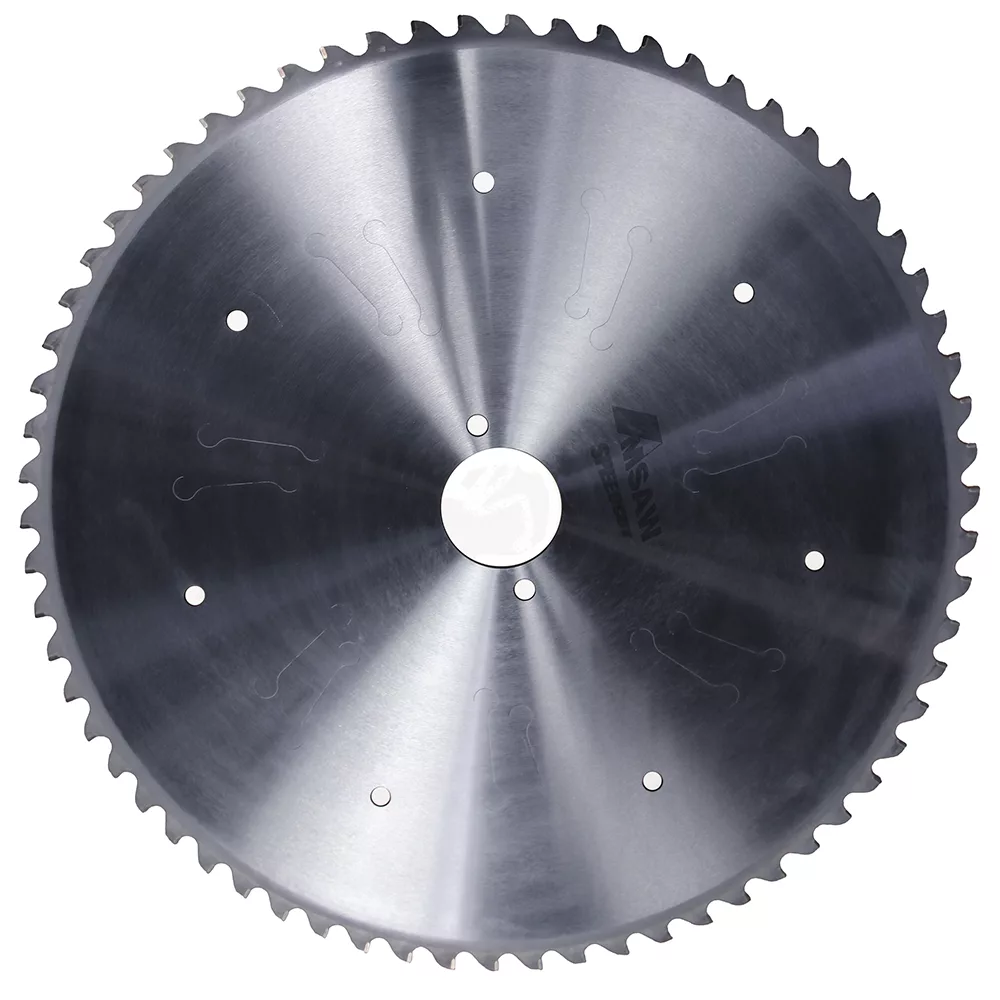
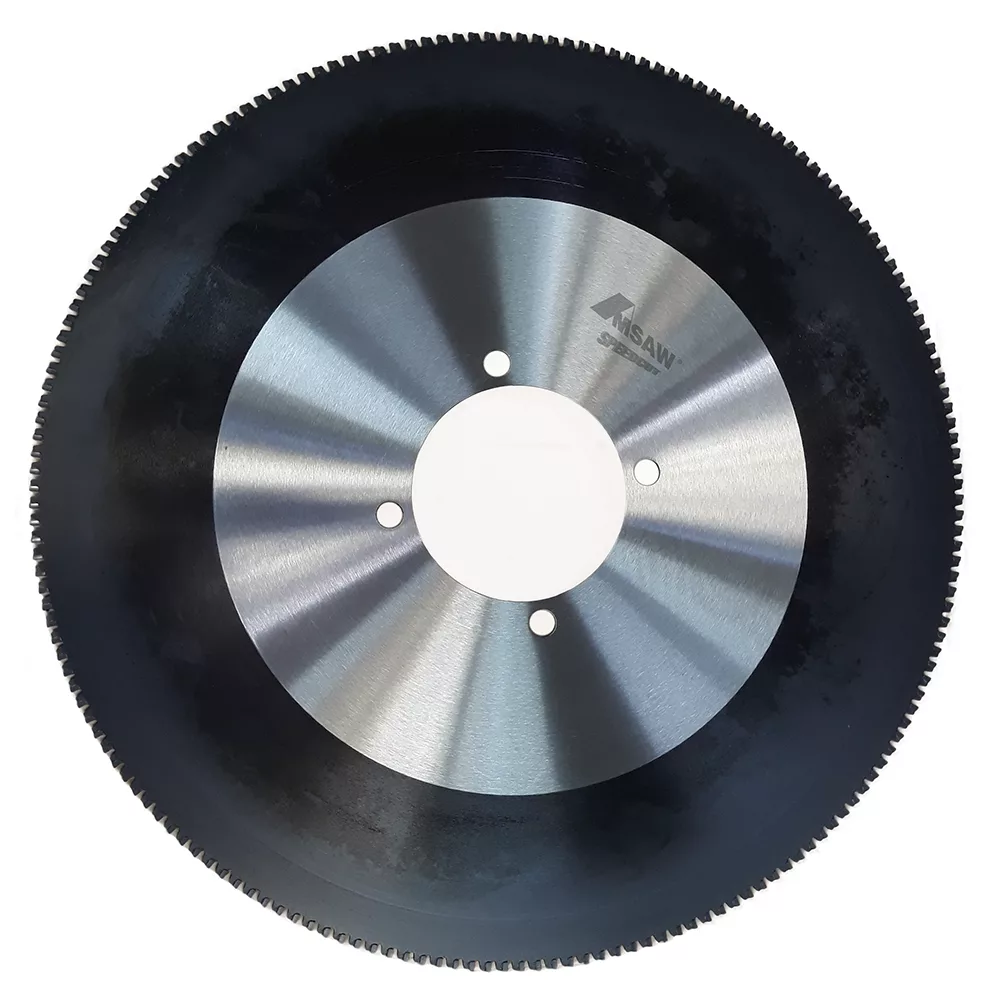
One Way (Throwaway) Blades
One-way blades are available up to 36” (914 mm) diameter and are used for specific steel and general purpose sawing. Larger diameter blade bodies are too expensive to be thrown away after only one use. One way blades are also hard coated in special chambers. The hard coating of the carbide tips increases the wear resistance of the cutting edges. They are also great for cutting stainless steel, because their coating prevents the welding of the chips to the carbide tip. Presently, these blades cannot be cost-effectively re-sharpened because of the hard coating, and they are discarded after one use.
Small diameter and thin blade bodies are cost effective because the blade body cost is absorbed by the higher tool life of the coated carbide tips. These one-way saw blades have replaced the regrind blades of smaller sizes. Another advantage is the reduced material waste. The saw blades can be thinner because the fatigue life of the blade body doesn’t have to extend for more regrinds.
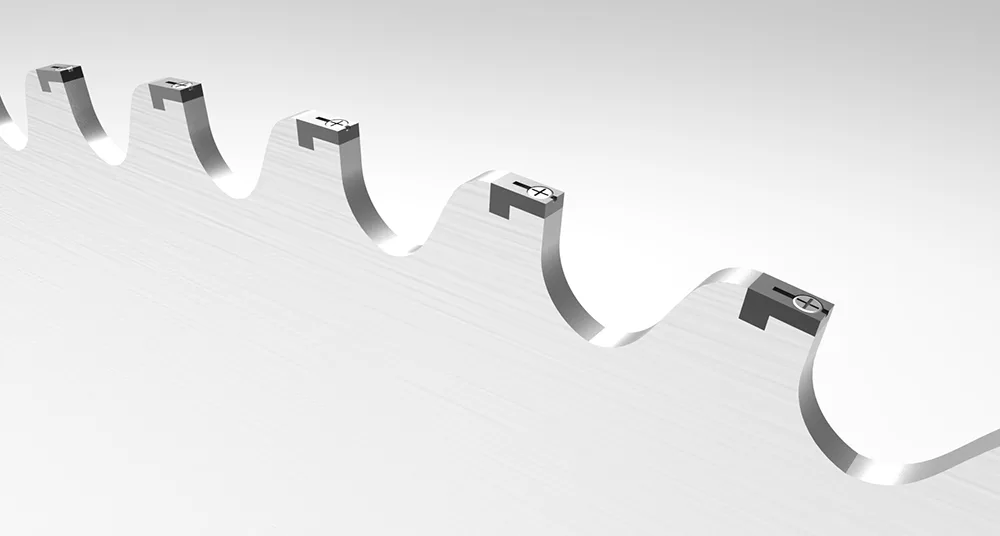
Replaceable Carbide Tip Circular Saw Blades
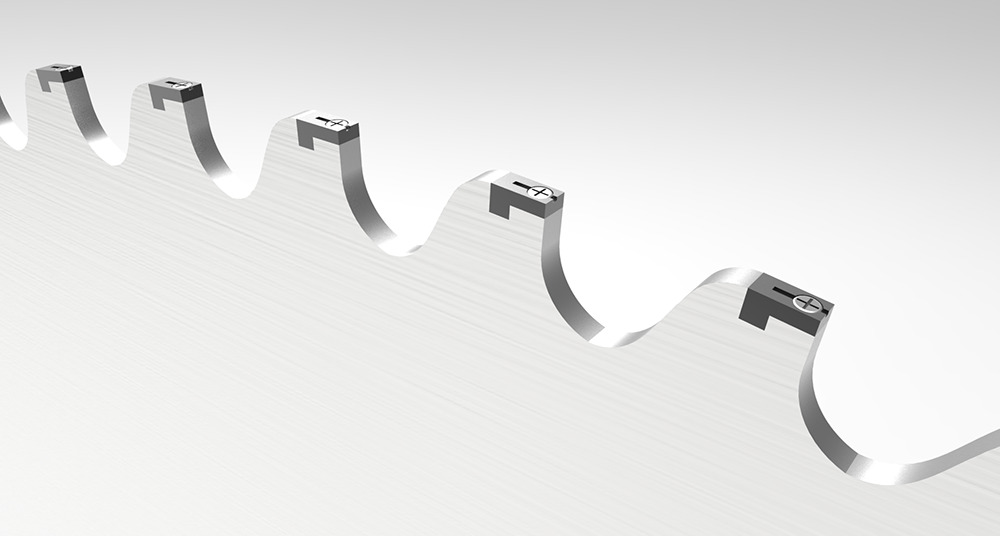
The experience with replaceable tip slotting cutters for milling, and the advantage of using already hard coated carbide tips, inspired manufacturers to use this technology on larger circular saw blades. Replacing the tips in your own shop eliminates exchanging the blades on your machine and saves the transportation cost to the blade grinding shop.
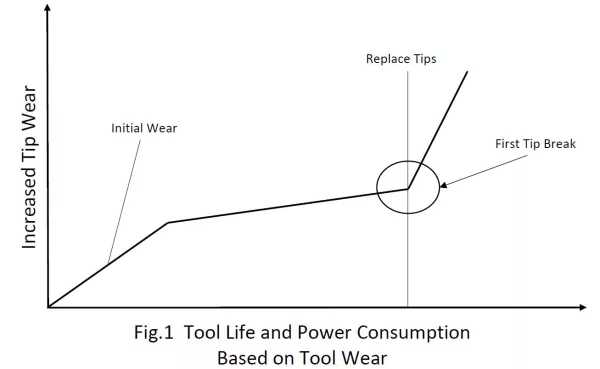
However, not every saw machine is capable of using replaceable tip blades. The machine must have sufficient power to cut with wider teeth and of a rigid design to reduce vibrations, and must be equipped with sensors that can detect tooth breaks and wear and tear to shut off the saw before the blade gets damaged.
Replaceable carbide tip blades are expensive because the blade body requires precision machining of the carbide tip seats. If the carbide seats are damaged, it may be hard to fix and the blade body may have to be discarded. Up to now, the market share of replaceable tip saw blades is small.
Cost Comparison of Blade Types
| Approximate Cost of Regrind (Re-sharpen) Carbide-Tipped Saw Blades | Cost |
| 24” Diameter, 60 teeth saw blade | |
| The cost of a new blade at 24” (610 mm) x 60 teeth | $390.00 |
| 4 times retipping 60 teeth = 240 tips at $3.50/tip | $840.00 |
| 40 x 5 teeth replacement = 200 tips at $5.35/tip (cost per tip is more due to a lower quantity) |
$1,070.00 |
| 40 times regrinding at $54 | $2,160.00 |
| Re-tensioning and other general maintenance at each regrind process 40 x $10/blade (approximate cost $10 per regrind) |
$400.00 |
| Total Cost for a blade (Assuming free shipment by the blade repair shop) |
$4,860.00 |
| Average tool life 15,000 sq. in. (9.7 m2)/blade for one usage. Total tool life for the life of a blade = 15,000 x 40= 600,000 sq. in. (384.6 m2) Average Cost per square inch of cut for 24” – 60 teeth resharpenable saw blade ($4,860/600,000) = |
$.008/sq. in. ($12.637/m2) |
Approximate Cost of One Way blades
| Approximate Cost of One Way blades | Cost |
| 24” - 80 Tip 0.12’’ (3 mm) kerf (tooth width) blade | |
| Approx. Cost | $461.00 |
| Tool life is much higher due to the coating, and is about 50,000 sq. in. (32 m2) The cost per square inch is ($461/50,000) = |
$.009/sq. in. ($14.4/m2) |
Approximate Cost of Replaceable Carbide-Tipped Circular Saw Blades
- What machines are available (HP, RPM, Stiffness, etc.)?
- How experienced is the saw operator?
- What material will be cut (chemical composition, hardness, shape, etc.)?
- What are the stock sizes and length?
- Quantity of cuts, per day, per week; and number of shifts?
- Is the shop location close to a good blade repair shop?
- What are the shop environments (quality of operation, maintenance, etc.)?
- What is the highest cutting rate?
- Is the machine fully automatic?
- Unattended operation required?
- Operator controlled production?
- Is Material loss due to wider Kerf critical?
- Is a new saw needed?
An in-depth discussion with a saw expert will give you the best answer!