








.svg)

Workholding tombstones come in a variety of materials. Here is a table guide to select the right material for your workholding tombstone:
Tombstone Properties
Each workholding tombstone material has various properties that may affect your application. Review the table to see which material is best for you.
| Tombstone Material | Cast Iron | Steel Weldment | Cast Aluminum | Aluminum Weldment | Epoxy Mineral |
| Weight | High | High | Low | Low | Low |
| Stiffness | High | High | Moderate | Moderate | Moderate |
| Vibration Damping | High | Moderate | Very Low | Low | Very High |
| Thermal Expansion Resistance | High | High | Low | Low | High |
| Machinability | High | Moderate | Very High | Very High | N/A |
| Cost | Low | Moderate | Moderate | Moderate | Moderate |
Tombstone Technical Data
| Tombstone Material | Cast Iron | Steel Weldment | Cast Aluminum | Aluminum Weldment | Epoxy Mineral |
| Density, c. (lb/ft3) | 425-487 | 490 | 190 | 170 | 150 |
| Logarithmic Decrement, c. (damping) | 0.004 | 0.002 | 0.0004 | 0.0004 | 0.035 |
| Linear Coefficient of Thermal Expansion, c. (1/K) | 11x10-6 | 11-13x10-6 | 23-10-6 | 23x10-6 | 12x10-6 |
| Tensile Strength, c. (psi) | 30,000-60,000 | 58,000-80,000 | 68,000-75,000 | 68,000-75,000 | 2,000-3,000 |
| Thermal Conductivity, c. (W/mK) | 50 | 50 | 140 | 140 | 2 |
Cast Workholding Tombstone Materials
Cast Iron Tombstones
Cast iron is a popular choice for workholding tombstones. It sets the standard for other workholding tombstone materials with its various favorable properties that include:
-
High stiffness
-
High vibration damping
-
High resistance to thermal expansion
-
High machinability
-
Low cost
Cast Aluminum Tombstones
Cast aluminum is favored when weight is critical. Compared to cast iron, it features a lower weight and higher machinability, but lacks in stiffness, vibration damping, and resistance to thermal expansion. Its main properties include:
-
Lightweight
-
Very high machinability
-
Very low vibration damping
-
Low resistance to thermal expansion
-
High thermal conductivity
Welded Workholding Tombstone Materials
Steel Weldment Tombstones
A steel weldment is generally used as an alternative to cast iron or unusual tombstone shapes. Cast iron can get costly with unique, startup casting patterns. Here are the main highlights of a steel weldment as a tombstone material.
-
High stiffness
-
High resistance to thermal expansion
-
No casting pattern required
Aluminum Weldment Tombstones
Aluminum weldments are favored over cast aluminum tombstones for unique, start-up patterns and better production lead time. Sometimes large aluminum castings can have porosity issues and have to be re-poured, which adds to the lead time. The downside: weldment does not have as much vibration damping as a casting. The main properties of an aluminum weldment include:
-
Lightweight
-
Very high machinability
-
Very low vibration damping
-
Low resistance to thermal expansion
-
High thermal conductivity
-
No casting pattern required
Special Workholding Tombstone Material
Epoxy Mineral Composite Tombstone
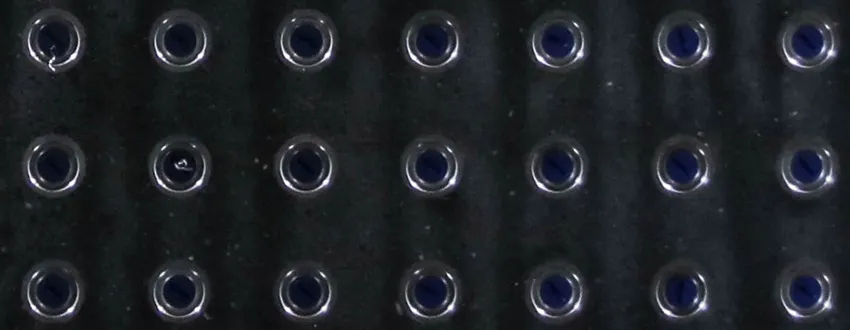
Epoxy mineral is generally used as an alternative to aluminum in a situation where low weight and high precision is critical. It is known for its exceptional vibration damping properties, low coefficient of thermal expansion, and very low thermal conductivity. This material is normally offered with a full grid of multi-purpose holes in the faces of the tombstone. These grid holes go directly into steel plugs that have been cast into the composite mold. Once the mold is created, tombstone customization is limited. To add machinability to an epoxy mineral tombstone, aluminum fixture plates can be attached to the tombstone faces, allowing for custom features. Its main properties include:
-
Lightweight
-
Very high vibration damping
-
High resistance to thermal expansion
-
Very low thermal conductivity
-
Not machinable
Now that you know what material to select for your application, what about the tombstone fixture shape? Find out how to choose your tombstone material with our next guide: How to Select the Right Shape for Your Workholding Tombstone?