





.svg)

What Is Power-Off Clamping?
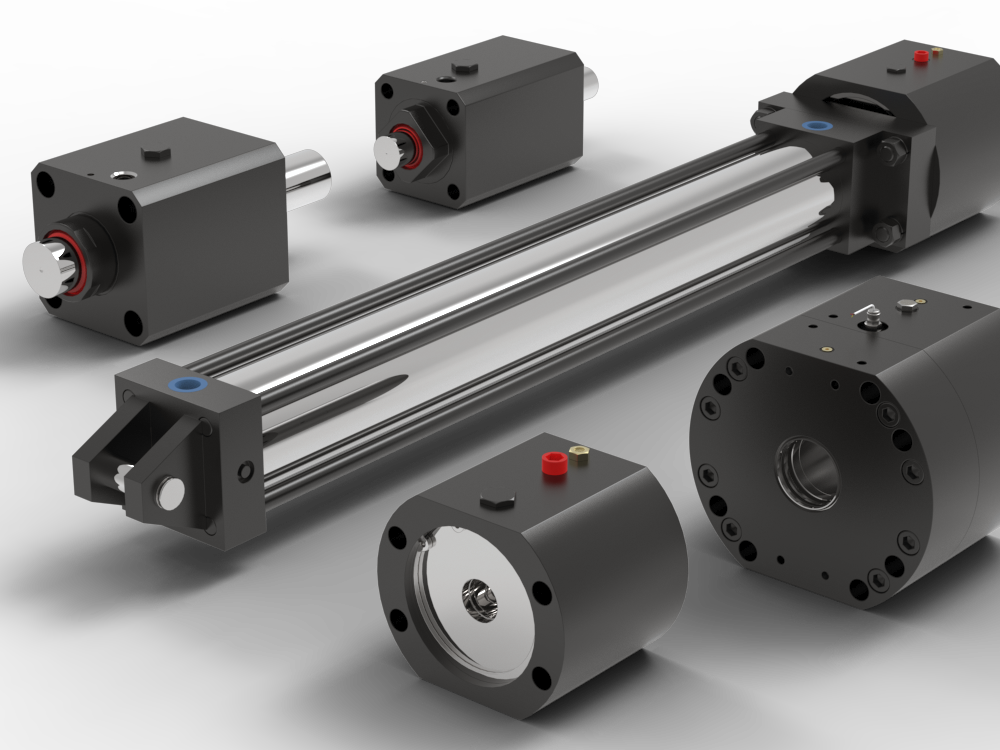
Power-off clamping is utilized to maintain position in the absence of pressure or power loss. In simple terms it is a pressure to “Unlock” and spring to “Clamp” device. When power is lost or pressure drops to zero, the clamp system is actuated.
Advantages of Power-Off Clamping
It’s not overtly apparent why removing power to engage a clamping mechanism is valuable. But, there are a few major reasons why power-off clamping is optimal when compared to power-on clamping.
While we all know that life is full of uncertainty, as manufacturers, we try to avoid it at all costs. There is always the possibility of sudden power loss to your facility, your machine, E-Stop conditions or even the failure of fluid power components due to unforeseen circumstances.
A power-on clamping system would fail in this situation. But, a power-off clamping system is designed to remedy this, because the default condition is secure. Power-off clamping is designed to engage (clamp) when pressure is removed and release (Unlock) when pressure is introduced. This allows the equipment to maintain axial position.
In the event of a power failure, a rod lock can retain the position of the cylinder rod within the movement tolerance. Without a rod lock, there is potential for the cylinder to over-travel or drift out of position. During machine recovery, the equipment may need to be moved back into position to start the next cycle. With a rod lock, this “recovery” movement would not be necessary. Applications such as in a high production rate facility like automotive or packaging, where time is key and position is important.
When power-off clamping systems are operating properly, the only element that experiences wear-and-tear are the seals of the hydraulic or pneumatic system.
The advantage of a power-off system is that because the clamping mechanism only releases with fluid power, it doesn’t compromise safety with a seal failure. If you’re using a power-on clamping system, the clamping mechanism would fail.
This makes the system more reliable and easier to use. It simplifies the safety element and makes the replacement of the sealing components more streamlined.
Power costs money.
When leaving a machine (like an industrial press) overnight, it needs to be secured with a clamping system. If you’re using a power-off clamping system, no power is required to secure the overnight system. With a power-on clamping system, your machine will continue requiring power, even when not in use.
Another example of how power-off clamping can improve power consumption is if there is a cylinder stop during a cycle. If the cycle runs for 58 seconds and the clamp needs to be disengaged for two seconds, you can limit power use to just those two-second intervals, whereas with a poweron system, you’d have to run power for 58 seconds of every minute.
When To Use Power-Off Clamping
Power-off clamping applications generally fall into two main categories, which are safety catcher types to prevent “Gravity Fall” conditions and “Position-and-Hold” types to maintain a precise position.
Gravity Fall Protection
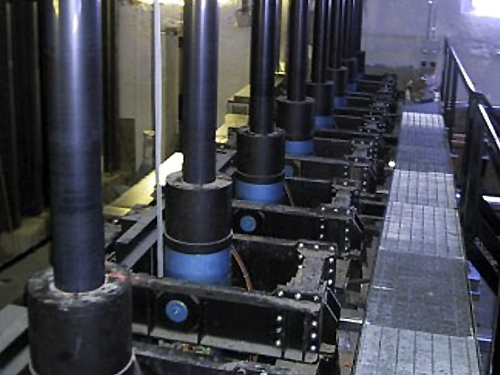
Gravity fall protection is needed wherever heavy lifted loads must be secured against falling or accidentally dropping, and are often used where protection of personnel and accident prevention must be achieved..
Catchers can control a falling mass at infinitely variable positions. Roughly 90% of safety catcher applications are for large industrial presses, which require a robust safety system.
Position & Hold Cylinders
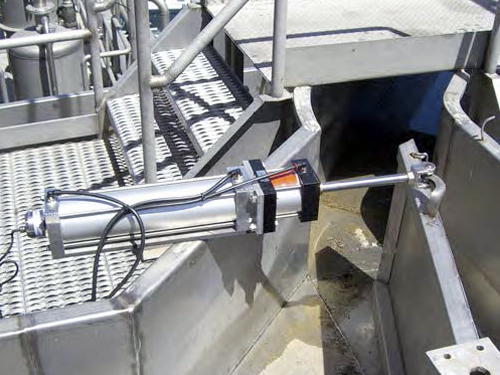
Applications that require precise position and holding of a rod can utilize a power-off clamping system as a cylinder attachment, such as Amlok rod locks. Rod lock systems can adjust and hold location in both directions and hold position precisely at 0.002”-0.003”.
Power-Off Clamping Options: Safety Catchers & Rod Locks
Safety catchers and rod locks are very similar, but they have different functions.
Safety Catchers
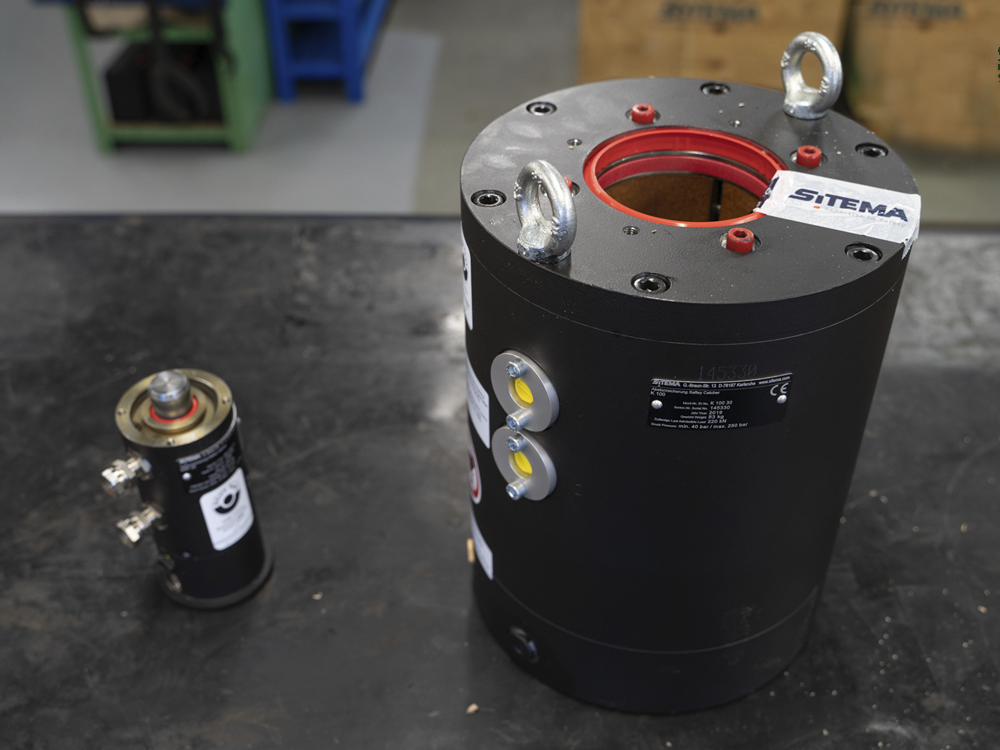
Safety catchers are single-acting, self-intensifying solutions that function similar to a finger trap where the load creates the holding—so more load equals higher holding forces.
Safety catchers are meant catch a falling or sinking load. Implementing a safety catcher on a separate guide rod is vital to preventing catastrophic damage from a falling platen.
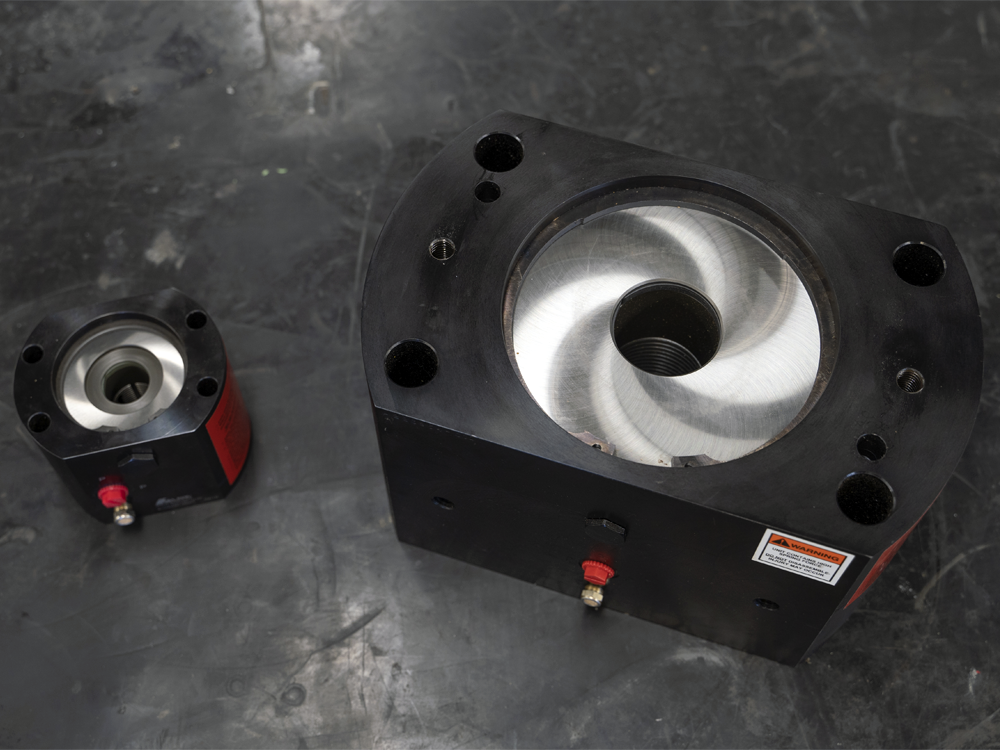
Rod Locks
AMLOK position hold, power-off rod locking devices are a double-acting solution with springs that create the holding capacity. It holds load during a power or pressure loss and is designed to directly attach to your cylinder/actuator providing holding in both directions. It can also be used in stand-alone applications.
Safety Catcher Vs. Rod Lock: What Do I Need?
Safety catchers and rod locks are very similar, but they have different functions. Safety catchers are meant to do just that, catch a falling or sinking load. Implementing a safety catcher on a separate guide rod is vital to preventing catastrophic damage from a falling platen.
A rod lock system is designed to position and hold along a rod. So, it’s less about safety and more about the refined position, although rod locks can be added to a safety system in conjunction with a safety catcher for redundancy and simplify system recovery.
| Amlok Rod Locks | Sitema Safety Catchers |
| Releasing is possible, even under load, the load to be secured can therefore still fall down. | Releasing under load is not possible, the unit is safe against unintended release |
| Releasing is possible even when the load as not been taken over. A dangerous situation can result from this behavior. Depending on the cylinder pressure, the load will jump upwards or sink down during releasing. | Releasing is not possible before the load has been taken off the clamping unit. Therefore, it is automatically made sure that the load has been safely taken over. This also ensures a smooth releasing by use on a cylinder |
| Clamping system always full strained. This results in a comparatively short service lifetime. | Clamping system strained only when necessary. This results in a high service lifetime. |
| Load cannot be lifted at pressure failure, trapped persons remain trapped. | Safety factor > 2 already included |
| Usually high holding forces are only possible with hydraulic clamping units. | Loads up to 220kN can be secured with pneumatic clamping units. |
| Usually no DGUV approval | DGUV approval for all standard Safety Catchers and Safety Brakes. |
But, what is the real difference between a safety catcher and a rod lock, and how do I select the best option for my specific application? Ask yourself, “Is my application a ‘position and hold’ or ‘gravity fall’ application?
Amlok Rod Locks for Position and Hold
Amlok units are bi-directional precision locking devices that hold in a precise location. The best solution for holding your rod or cylinder in place mechanically is the AMLOK. Whether you need to hold an external load in place or counteract the inherent issues with a cylinder (over travel, bouncing, drifting, reverse travel) this is the best way to resolve these issues. If positioning is important to your team, then Amlok is the solution.
Sitema Safety Catchers For Gravity Fall Protection
In the case of a falling load where you want a safe and reliable solution, a SITEMA Safety Catcher is the Defacto standard. These are designed to decelerate and stop a falling load in the event of a gravity fall situation. The device is singleacting.
This creates a situation where the load is held until the power system is back online and functioning (you need to move the press upwards after power is restored to “reset” the SITEMA ensuring you are in a safe condition.
A Simple Way to Determine What You Need
| Application | Solution |
| Position and hold | Amlok |
| Bi-Directional Movement | Amlok |
| On the end of a cylinder | Amlok |
| Press Safety | Typically Sitema |
| Gravity Fall Prevention | Sitema |
| Braking Applications | Sitema |
At the end of the day, there can be some overlap on the different clamping solutions. Please consult us for any advice on your application.
ENVIRONMENTAL FACTORS TO CONSIDER WHEN CHOOSING A SAFETY SOLUTION
There are several environmental factors that can disrupt the effectiveness of your rod lock or safety catcher if you fail to consider them.
Units that are subject to extreme weather conditions have several options available, such as special sealing made with more durable materials, different housing materials, and oil filling to prevent internal corrosion in the case of contamination from the outside.
Corrosion-resistant materials such as stainless steel and electroless nickel plating are often incorporated in harsh environments to prevent leakage and/or outside damage.
High vibration can cause several internal failures that warrant additional testing based off of the data provided by the factory to the manufacturer. The vibration can provoke issues with bearing materials causing them to break or weaken. If high vibration is an issue, our team can help determine if applicable and correct product selection.
Applications that are submersed completely in water or other chemicals require additional sealing and oil filling options. Oil filling and sealing prevent outside contaminants from leaking into the unit therefore preventing corrosion.
Whether freezing cold or blistering hot, special Viton seals can be used for extreme temperatures. They have a specialized polymer that is designed to not get too brittle in extreme cold conditions and not melt in extreme heat. In fact, the Viton seals are designed to operate between -20°C and +205°C depending on the grade. It can take even higher or lower temperatures such as -30°C / -45°C and +230°C, but for shorter working periods. The SITEMA and AMLOK operating temperatures are 0° to +60°C. If application temps are out of this range, then please consult factory.
Caustic and food-grade environments can be challenging. High acid environments could degrade and disintegrate normal seals, so special materials and options must be considered to avoid corrosion. This would be what is referred to as washdown applications. Applications where customers maintain a clean environment such as food or pharmaceutical industry. Special materials and seals would likely need to be used to ensure durability.
Other environmental factors could include high moisture or salt spray applications that would require housings and seals made of special materials like stainless steel or electroless nickel plating.
While your environment needs to be considered when looking into a new Safety Catcher or rod lock system, SITEMA and AMLOK have a variety of customizable solutions and a team of engineers to make sure the proper system is put in place for your application.
Safety In Industrial Press Machines
If a large industrial press loses power and the platen comes crashing down it can cause catastrophicdamage to the machine, serious injury to the machine operator, and in the worst cases, loss of human life. For this reason, various governmental standards and regulations have established guidelines and directives to prevent against the damages of a gravity fall due to loss of power to the press.
Power-off clamping devices can be designed into new machinery or added to existing machines to guarantee compliance for the safety standards throughout the world. But, what are these standards for hydraulic, pneumatic, and mechanical power presses, and how can they be met?
The four major safety regulations
The newly revised standard for press machines, “ANSI B11.3-2012 American National Standard for Machines - Safety Requirements for Power Press Brakes,” is available at ansi.org. The requirements of this standard apply to those machines classified as power press brakes (referred to simply as “press brakes”), which are designed and constructed for the specific purpose of bending metal, where the press brake is provided with a plate-type ram and a plate-type bed with provisions for attaching standardized press brake tooling. ANSI is a private, not-for-profit organization dedicated to supporting the U.S. voluntary standards and conformity assessment system and strengthening its impact, both domestically and internationally.
OSHA defines press safety devices as “Slide-Locks”. A slide lock is an energy-isolating device applied to a power-press that engages mechanically to support the maximum anticipated load. All forms of slide locks are intended to address gravity hazards. Directive CPL 02-01-043 addresses slide-locks enforcement policy, inspection procedures and performance guidance criteria is available at OSHA.gov. Technically, there is no other rating for the U.S. apart from OSHA.
Although the CPL is a directive based on safety solutions, they do not spell out exactly what equipment needs to be used. Unlike the European or Canadian directives which take a “product” approach and specify the safety requirements down to the device level, OSHA takes more of a “systems” approach to safety, meaning they describe the measures that must be taken to ensure a safe system. While this offers some flexibility in choosing a safety device, it also places a greater burden on those responsible for ensuring that the chosen safety measures meet OSHA standards.
The Standards Council of Canada (SCC) is Canada’s national accreditation body responsible for the development and application of standards publications that establish accepted practices, technical requirements and terminologies for products, services and systems. The requirements of the CSA Z140-02 Power Press Standard apply to the design, manufacturing, installation, maintenance, and operation of power presses. CSA Z142-02 covers the occupational health and safety requirements for all classes of power presses that are fitted with a ram (plunger or slide) and dies for the purpose of blanking, cutting, trimming, drawing, punching, forming (bending), stamping, assembling, or processing metal and other materials and is available at scc.ca.
DIN represents German interests within ISO, the International Organization for Standardization. The ISO is a non-governmental body consisting of over 160 countries. They are responsible for developing standards for various industries which promote quality, safety, and efficiency.
The requirements of ISO 16092-3:2017 apply to machine tools safety for hydraulic presses ranging in size from small high-speed machines with a single operator producing small workpieces to large relatively slow-speed machines with several operators and large complex workpieces and can be found at ISO.org or Din.de
A SYSTEMS APPROACH VERSUS A PRODUCT APPROACH TO PRESS MACHINE SAFETY STANDARDS
Today, in the U.S., most modern hydraulic and pneumatic presses have a variety of OSHA-mandated protection systems in place to ensure operator safety. Guards, interlocks, electro-sensitive and opto-electronic devices, emergency stop devices, and other redundant systems have helped make presses safer in recent years. But when it comes to safeguarding the presses themselves from expensive damage to the press or dies, standards in the U.S. fall short of their European CEN counterpart, which uses a product over a systems approach.
In Canada and throughout Europe, a safety catcher is a mandatory device. The primary advantage of the safety catcher over other safety methods, is that it will engage and prevent a crash anywhere in the travel stroke of the platen. A blocking device, such as slide-lock solutions that work by blocking the sliding platen with a swinging device or ram block or by preventing the platen from crashing down, can only prevent a crash when the platen is located above the blocking component.
Rod Locks Vs. Safety Catchers In Press Machines
Rod Locks function similarly to safety catchers and can certainly make a press safer than they would be without a power-off clamping device, but rod locks differ from safety catchers in both form and function. Functionally, the purpose of a rod lock is not to catch the platen during a gravity fall condition, but to position and hold the load in a precise location. The primary reason a rod lock is not considered a safety device can be summed up in one word: springs.
Rod locks can certainly make your system safer, but technically, they aren’t a true safety device. Safety catchers are the clear and convenient solution for safety compliance throughout the globe. Presses equipped with safety catchers are guaranteed to protect against injury, liability, and loss.
HOW TO BE CERTAIN YOUR PRESS MACHINES MEET THE STANDARDS FOR ANSI, OSHA DIRECTIVE CPL, CSA ZH2.02, AND DIN 6391
Press machines have so much room for failure if not cared for or operated properly, or if a preparation step is skipped. With a heavy ram under a high amount of pressure and no failsafe, the chance of catching a body part in the press may be higher than you’d assume. That is why ensuring a compliant solution for industrial presses is a big part of what we do.
Though U.S. safety regulations offer some flexibility for meeting OSHA standards, we believe safety catchers are the clear and convenient solution for safety compliance, not just in the U.S. but throughout the globe. As the exclusive partner of Sitema™ since 1992, we at AME have done our due diligence. Not only have we have we successfully implemented thousands of Sitema™ safety catchers in press applications throughout North America, but we have had Sitema™ safety catchers evaluated according to OSHA Directive CPL 02-01-043. OSHA has determined that the Sitema™ Safety catcher meets all of the requirements of the directive.
We hope this information helps answer the most frequently asked questions about press safety regulations, but we know when it comes to safety compliance the devil is in the details. That’s why our experts are available to assist you with the implementation of the ideal press safety device to meet all your press safety needs. Please contact one of our factory representatives for a custom solution today.
Power-Off Clamping Integrators
Power-off clamping is a niche need in the world of manufacturing and engineering; but when you need it, it’s vital to pick the right system. But, who might need to incorporate a power-off clamping system into their work?
Mechanical engineers, especially those at OEMs need to incorporate clamping systems into their designs, both for safety and function. They need to know what the application requirements are for the specific use-case, and how to create the greatest risk reduction, which could mean including a safety-catching mechanism, a position-and-hold mechanism, or in rare cases both for redundancy.
Mechanical engineers also need to keep costs to a minimum while maintaining crucial functionality and keeping the system simple. Power-off clamping provides this for many situations including safety and positioning applications.
Maintenance managers would look to include a power-off clamping system to reduce the risk of machine downtime, start-up and recovery and employee hazards. Because power-off clamping systems are easily incorporated, they can help ensure the reliability and safety of existing machines.
They look for a system that’s user-friendly and easy to install and maintain. All of this creates new (or renewed) peace-of-mind for machine operators who are using equipment that may not have been safe in the past.
An engineering consultant would look at a power-off clamping system the same way a mechanical engineer would. They would look to take as many pre-existing subsystems that are known to work well and integrate them into a system to make sure they can accomplish the overall goal of the complex “science project”. Safety engineers are well versed in the regulatory requirements for industrial machinery (link to and want to ensure that the components and systems check all the boxes.
Engineering consultants need the power-off clamping manufacturer to understand the high-level objectives for the project as a whole, rather than just the details of the clamping component. Advanced Machine and Engineering’s Amlok clamping systems are designed to be off-the-shelf, but can be customized when needed, and their comprehensive applications support makes it easy to integrate into new and existing systems.
Machine integrators and rebuilders would be looking to retrofit aging equipment with modern safety devices. Typically, the Integrators assist the MRO or User market to complete machine upgrades.
Safety regulations change from country to country and across different markets and industries, and in case those regulations become more stringent, these integrators would want the flexibility to sell into a broad range of markets.
An industrial distributor would have a less technical objective when looking for a supplier of power-off clamping devices. When the end customer requires a power-off clamping device, they’re ultimately looking for a simple, more transactional relationship based on the best price and overall cost for the project. Responsive delivery is a priority to these buyers and suppliers that stock inventory for common standards can have a big advantage over their competitors.
A “don’t make me think” approach wins with industrial suppliers who don’t have the capacity to become an expert in each of the countless products they sell. So an easy to understand buying experience is very valuable for them.
The designers, implementers, integrators, and buyers that require power-off clamping systems have different challenges, goals, and objectives. We consider each perspective to be able to adapt to support their unique needs.
Pricing Factors Between Rod Locks and Safety Catchers
Rod locks and safety catchers are attachments to a hydraulic or pneumatic cylinder and buyers often wonder why they more than the cylinder itself. When you look at the logistics of making a rod lock versus making a cylinder, the manufacturing process of a cylinder is more straightforward than the process for a rod lock. Cylinders involve cutting material to length and then machining them with a few other modular components; whereas rod locks involve more of a robust and precision-based process to handle heavy forces.
But why else do rod locks cost more than the cylinder?
Product construction is the main factor. A rod lock is constructed of more precision components that involve higher precision and are harder to make including:
- Precision-machined housing
- Hardened and ground clamp system
What Other Price Factors Are There?
It comes down to application— that’s what is going to drive your costs. Variables include:
Some applications require a custom design or unique installation specifications that can drive up the costs. Whether it’s for extra labor for installation services or for certain design features for unique applications, the more customized the product, the more expensive it tends to be.
More holding requires a higher price due to the scaling up of the components that make up the product.
Sometimes basic materials just won’t cut it, so specialized materials are used for certain environmental conditions or specialized applications. For custom units that need to hold 1500+lbs?, bigger springs can be added but they’re going to cost more. To prevent corrosion and rust, stainless steel can be used, but again, it’s going to drive up the costs.
Environmental conditions can drive the price up and change the materials that are necessary; for example, special designs may
be needed for harsh environments. If your applications require resistance to something, like salt spray, special seals and a stainless steel or electroless nickel plated housing can be utilized. Our team can work with your application needs to drive the right solution, typically at a higher cost, to meet your needs.
As mentioned earlier, a larger diameter equals higher holding and requires more raw material, which means more expenses.
In some applications, designers will attempt to use an existing rod or cylinder for mounting the locking device. In many cases, the existing equipment may be oversized compared to the actual load exerted on the locking device. This situation can produce higher prices for the locking device.
In certain applications, a separate rod may be integrated with the Amlok due to limited mounting space. Typically, SITEMA Safety Catchers are mounted on a separate rod because Catcher is only to protect gravity fall conditions and not required to hold the tonnage of the press.
Mounting arrangement costs can due to the machine configuration. For example, sometimes two lighter-duty Catchers must be used rather than one large unit. This is due to the machine configuration.
The most common practice for mounting a Catcher is to bore a hole through the crown of the press and attach a rod to the platen.
Custom solutions require time, problem-solving, critical thinking in design, and possibly prototyping— all services that incur cost beyond the price of the unit.
Customs, freight, and fees also affect the price.
Total Cost of Ownership
After reading all this information on costs, it may seem like the initial expenses of power-off clamping units are high. However, rod locks and SITEMA solutions are more flexible and can be swapped out and repaired multiple times as long as the housing remains in good shape— providing a higher ROI and lower total cost of ownership. For roughly half the price of a new one, you can repair your rod lock keeping the costs of ownership relatively low.
Related Content
SITEMA Satisfies OSHA Requirements
SITEMA safety catchers have been evaluated according to OSHA Directive CPL 02-01-043. OSHA has determined that the SITEMA safety catcher meets all of the requirements of the directive.
Introducing the New RCHX Exclusion Series Rod Lock: Built for Extreme Conditions
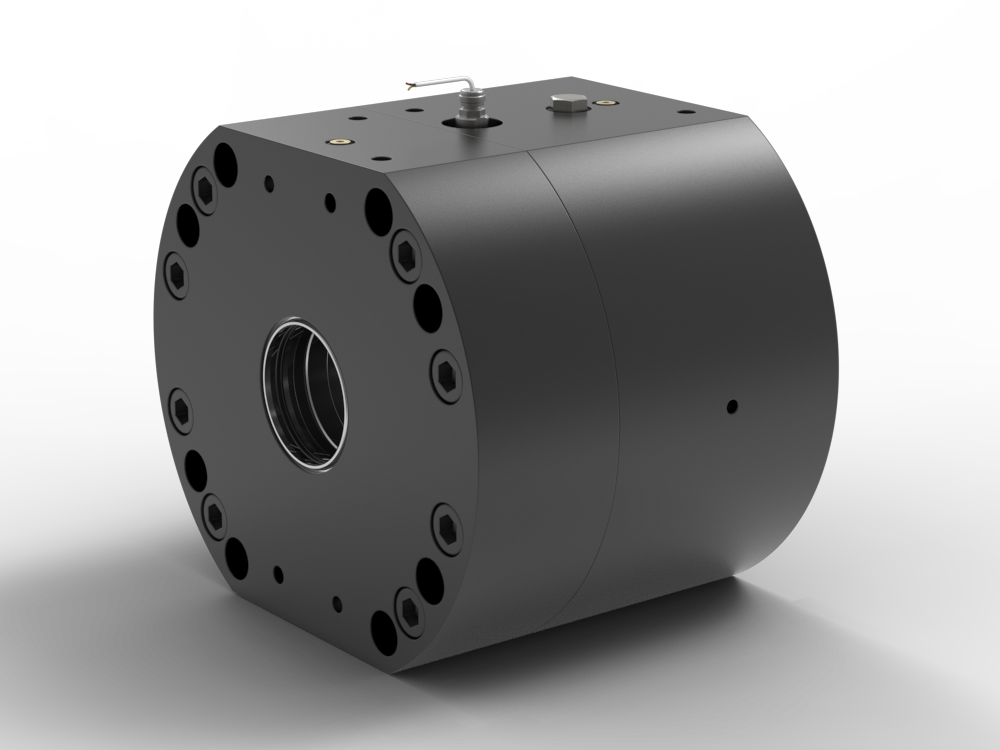
When it comes to reliable and safe machine operation in severe environments, having the right components makes a significant difference. That's why we are excited to introduce the RCHX Exclusion Series Rod Lock — a hydraulically driven rod lock designed specifically for harsh conditions and submersible applications. This latest innovation is a modified version of the original AMLOK RCH Rod Lock, re-engineered to withstand the most demanding applications.
Electrifying Safety: Introducing the KSE Electronic Safety Brake for Automation
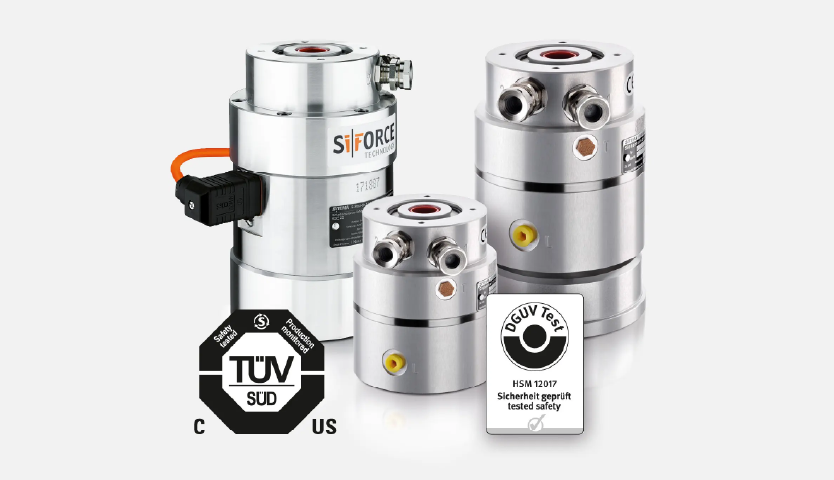
In the world of modern automation, there's a clear shift toward fully electric systems. Learn about the new electric safety brake from Sitema.