







Blogs
Workholding
Product Selection
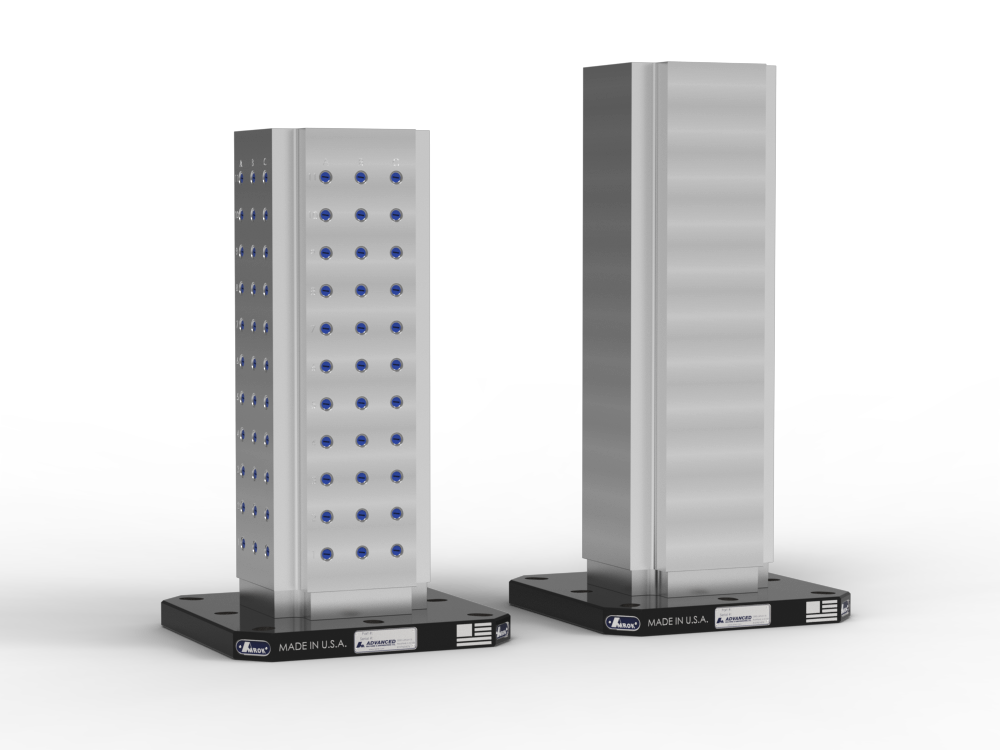
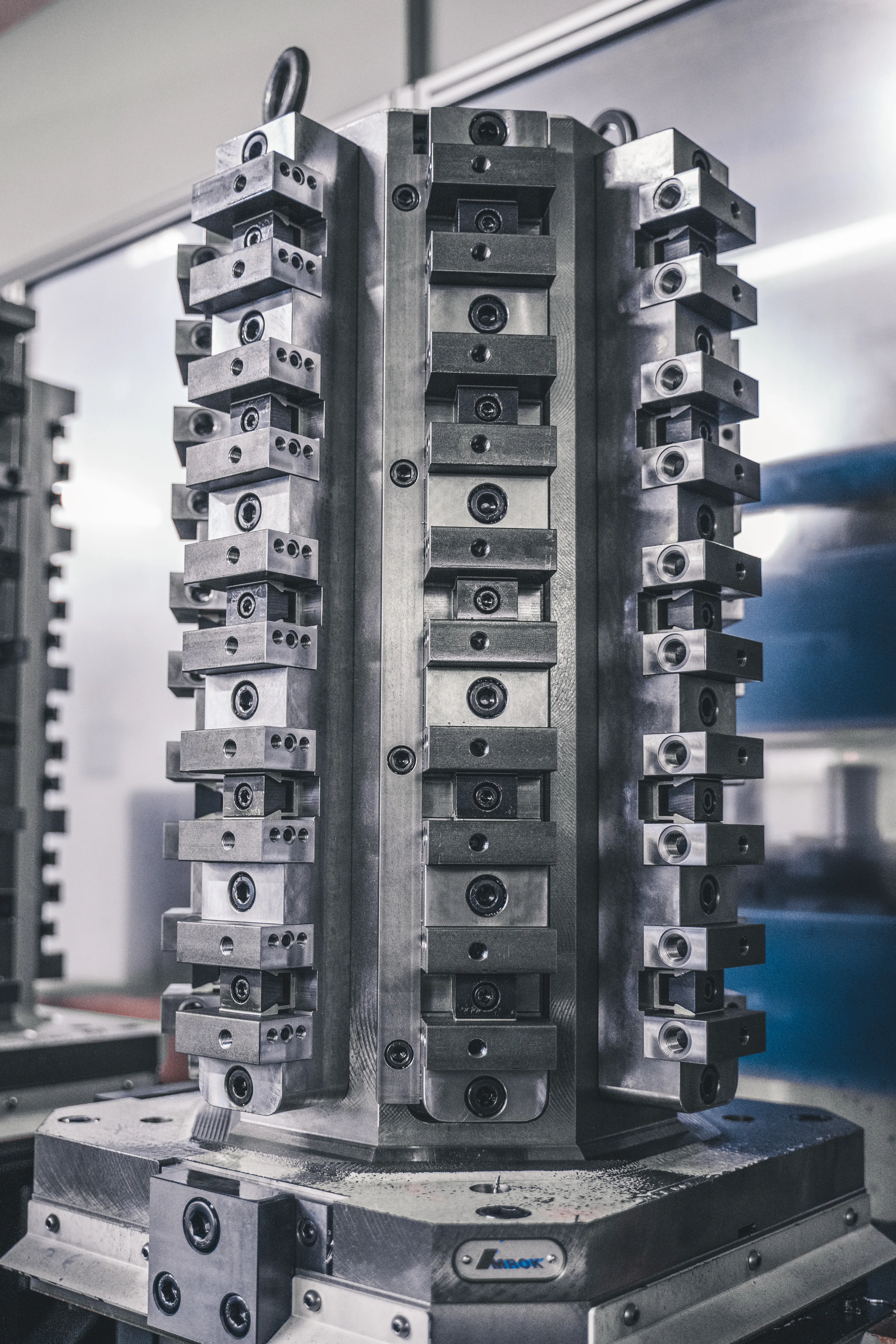
Finding the Right Tombstone is Easy with Hennig
Read our handy guide on how to select the right tombstone from their wide range of products.
Download installation and maintenance manuals, order spare parts, and find tutorial videos to help with your chip conveyor installation and operation.
Download installation and maintenance manuals, order spare parts, and find tutorial videos to help with your chip conveyor installation and operation.
.svg)
Hennig Power Protection is a dedicated division specializing in custom-engineered generator enclosures, fuel systems, and power infrastructure for mission-critical applications across data centers, healthcare, telecommunications, and industrial facilities.
Precision machining, fabrication & welding services from our Rockford, IL facility. Complete manufacturing solutions with ISO-certified quality.
Precision machining for turbine...
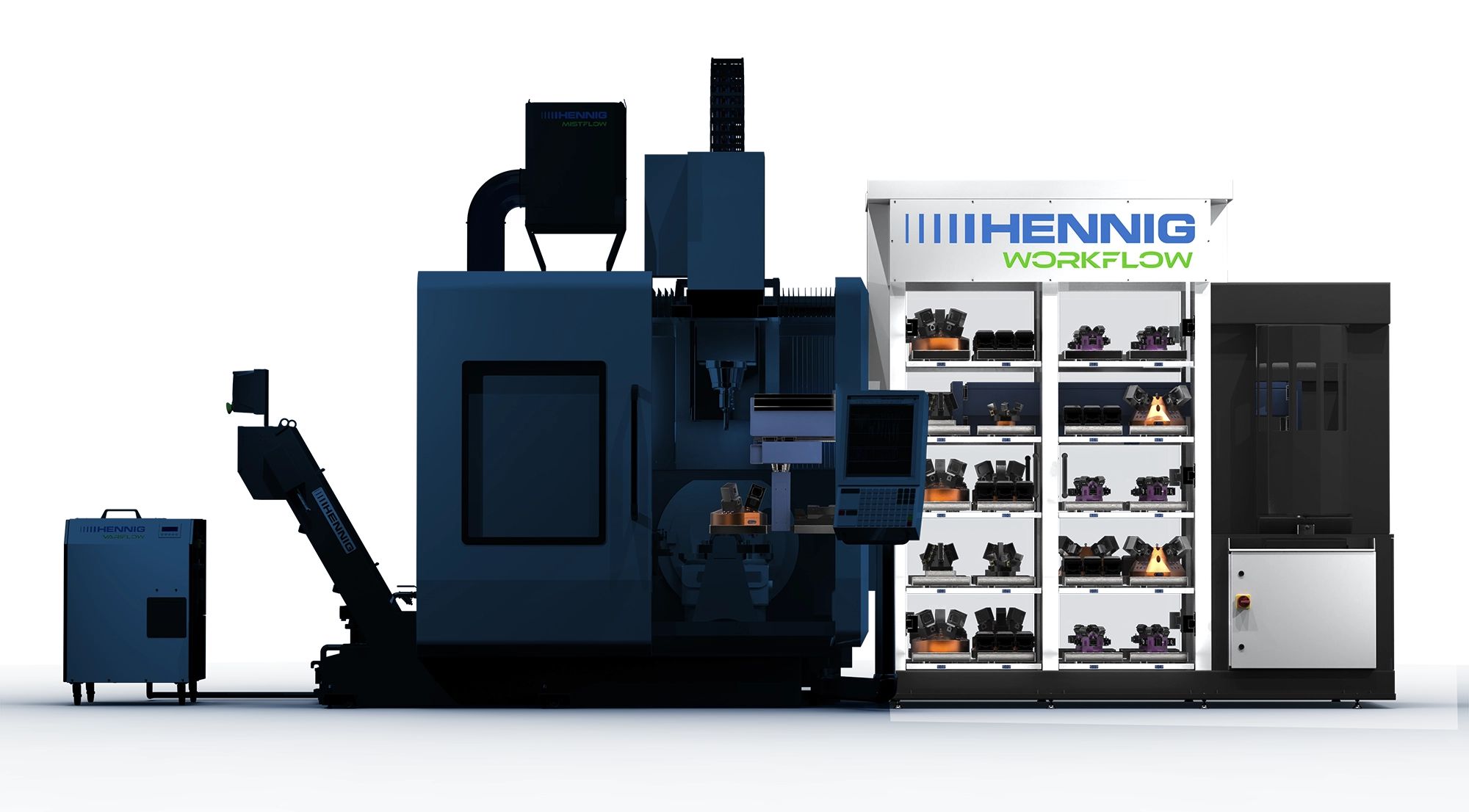
Pallet delivery, robotic tending & software for lights-out production
CNC machining centers, lathes, grinders & multi-axis equipment
Safety systems & rod locks for hydraulic & mechanical presses

A self-centering vise with high clamping force and precision for fast, reliable part positioning.
The SCHUNK KONTEC KSC3 is a robust self-centering vise designed to support versatility in CNC machining. Offering extremely high clamping forces in a compact, low-profile design, it is ideal for both roughing and finishing operations. The corrosion-resistant, nickel-plated base and encapsulated spindle ensure reliable performance in demanding shop environments.
| Key Features | |
| High Clamping Force & Precision | Delivers on exceptional clamping force while maintaining repeatability within ±0.01 mm; the ball bearing, clearance-free spindle ensures maximum accuracy |
| Low-Profile Build | Flat design maximizes the machine envelope, allowing larger workpieces or multi-vise configurations; ideal for 5-axis applications where tool clearance is critical |
| Durable | Nickel-plated base body provides superior corrosion protection |
| Sealed Construction | Spindle and internal mechanism are fully encapsulated, keeping out chips and coolant for minimal maintenance |
| Quick Setup | Laser-etched measurements for fast, precise jaw pre-positioning |
| Versatility | Wide range of interchangeable jaws adapts the KSC3 to diverse tasks - from raw stock to delicate finished parts; reversible and grip jaws available |
| Integration Ready | Mounts directly on VERO-S quick-change pallets via optional clamping pins, enabling rapid changeovers and easy integration into automated cells or tombstone setups |
| Product ID | 3D CAD | Part Number | Width Of Clamping Vise | Vise Length | Version | |
|---|---|---|---|---|---|---|
| KSC3 80-130 | 1508857 | 80.0 mm | 130.0 mm | Standard | ||
| KSC3 80-130-S | 1514209 | 80.0 mm | 130.0 mm | Floating | ||
| KSC3 grip 80-130 | 1514206 | 80.0 mm | 130.0 mm | With reversible grip jaws | ||
| KSC3 80-190 | 1514208 | 80.0 mm | 190.0 mm | Standard | ||
| KSC3 80-190-S | 1514220 | 80.0 mm | 190.0 mm | Floating | ||
| KSC3 grip 80-190 | 1514207 | 80.0 mm | 190.0 mm | With reversible grip jaws | ||
| KSC3 125-160 | 1514241 | 125.0 mm | 160.0 mm | Standard | ||
| KSC3 125-160-S | 1514247 | 125.0 mm | 160.0 mm | Floating | ||
| KSC3 grip 125-160 | 1514238 | 125.0 mm | 160.0 mm | With reversible grip jaws | ||
| KSC3 125-235 | 1514242 | 125.0 mm | 235.0 mm | Standard | ||
| KSC3 125-235-S | 1514248 | 125.0 mm | 235.0 mm | Floating | ||
| KSC3 grip 125-235 | 1514239 | 125.0 mm | 235.0 mm | With reversible grip jaws | ||
| KSC3 125-300 | 1514246 | 125.0 mm | 300.0 mm | Standard | ||
| KSC3 125-300-S | 1514249 | 125.0 mm | 300.0 mm | Floating | ||
| KSC3 grip 125-300 | 1514240 | 125.0 mm | 300.0 mm | With reversible grip jaws | ||
| KSC3 160-280 | 1514250 | 160.0 mm | 280.0 mm | Standard | ||
| KSC3 160-280-S | 1514255 | 160.0 mm | 280.0 mm | Floating | ||
| KSC3 160-480 | 1514254 | 160.0 mm | 480.0 mm | Standard | ||
| KSC3 160-480-S | 1514256 | 160.0 mm | 480.0 mm | Floating |
Each model below is routed to the best next step based on availability.
Every changeover means idle spindle time. Multi-part fixturing slashes setup frequency — so your machines spend more hours cutting and less time waiting.
Based on 250 working days/yr. Multi-part fixturing reduces changeover frequency so your spindle spends more time cutting.
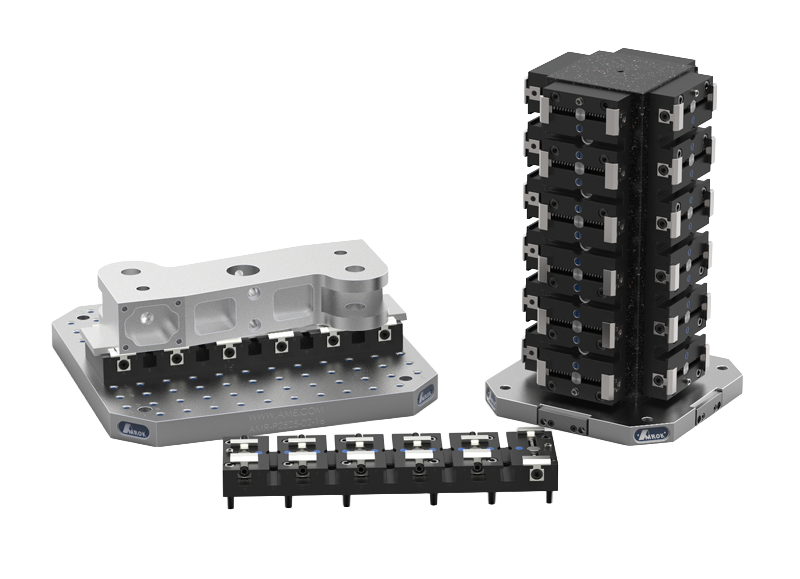
Read our handy guide on how to select the right tombstone from their wide range of products.
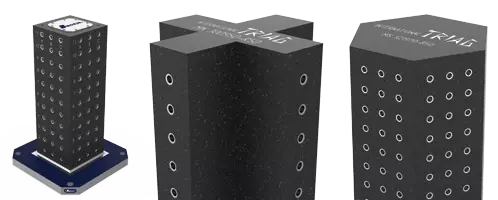
Dr. Tony Schmitz, a professor specializing in vibration analysis, came to AME to do a series of tests on the various material types of tombstones and breaks down his findings to determine the best type of tombstone for your shop.
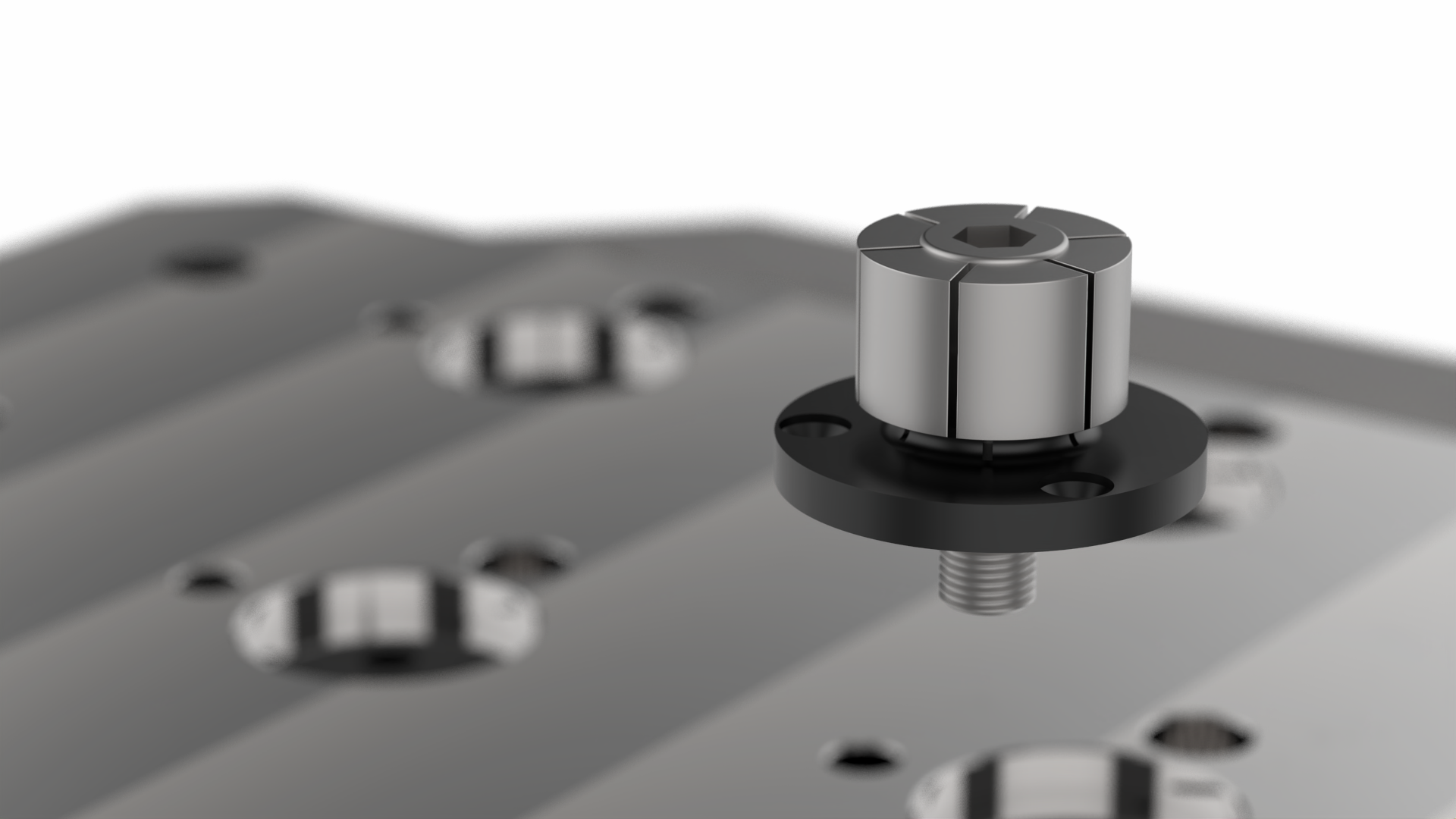
If you want to reduce your overall costs and increase your flexibility to meet your customers’ demands, consider incorporating off-machine set-ups into your machining process.
Both Hennig and its sister company, Advanced Machine & Engineering, now operate under the Hennig brand.
Same team. Same products. Same company. Different look.
Unifying the two brands under one name clarifies our offerings and makes them easier for you to navigate — one website, one team, one trusted partner.